


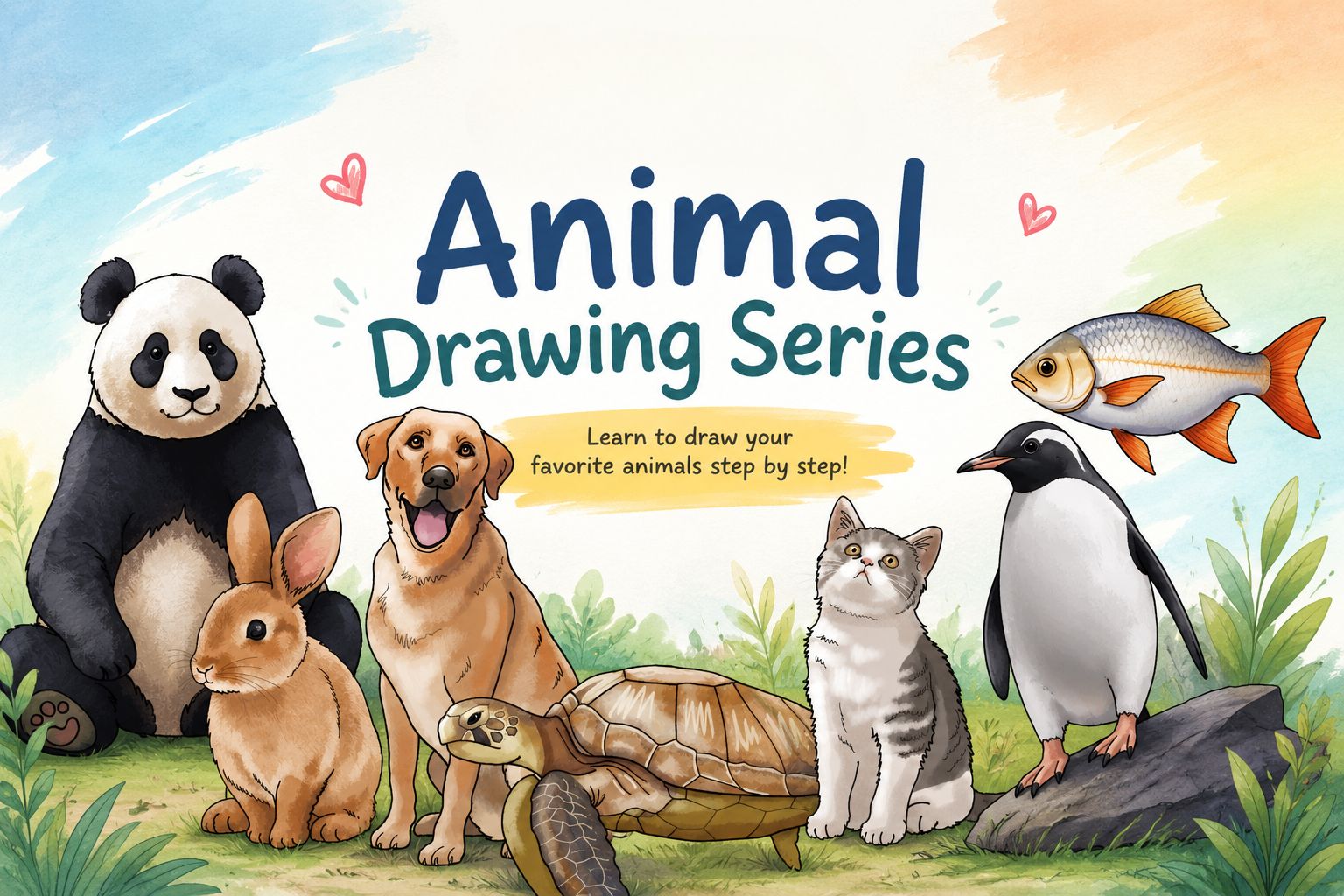
There is something magical about the moment a blank page turns into a fish, a panda, or a sea turtle. The Animal Drawing Series on Drawing Desk was built around that exact moment, breaking down seven beloved animals into simple, repeatable steps so that anyone, from a five-year-old holding a stylus for the first time to a seasoned illustrator looking for a warm-up exercise, can draw with confidence.
In this guide, we'll walk through why the Animal Drawing Series matters, what children and grown-ups actually learn from it, and why the four-stage lesson structure works so well for beginners and experienced artists alike.
Why Step-by-Step Animal Drawing Lessons Matter
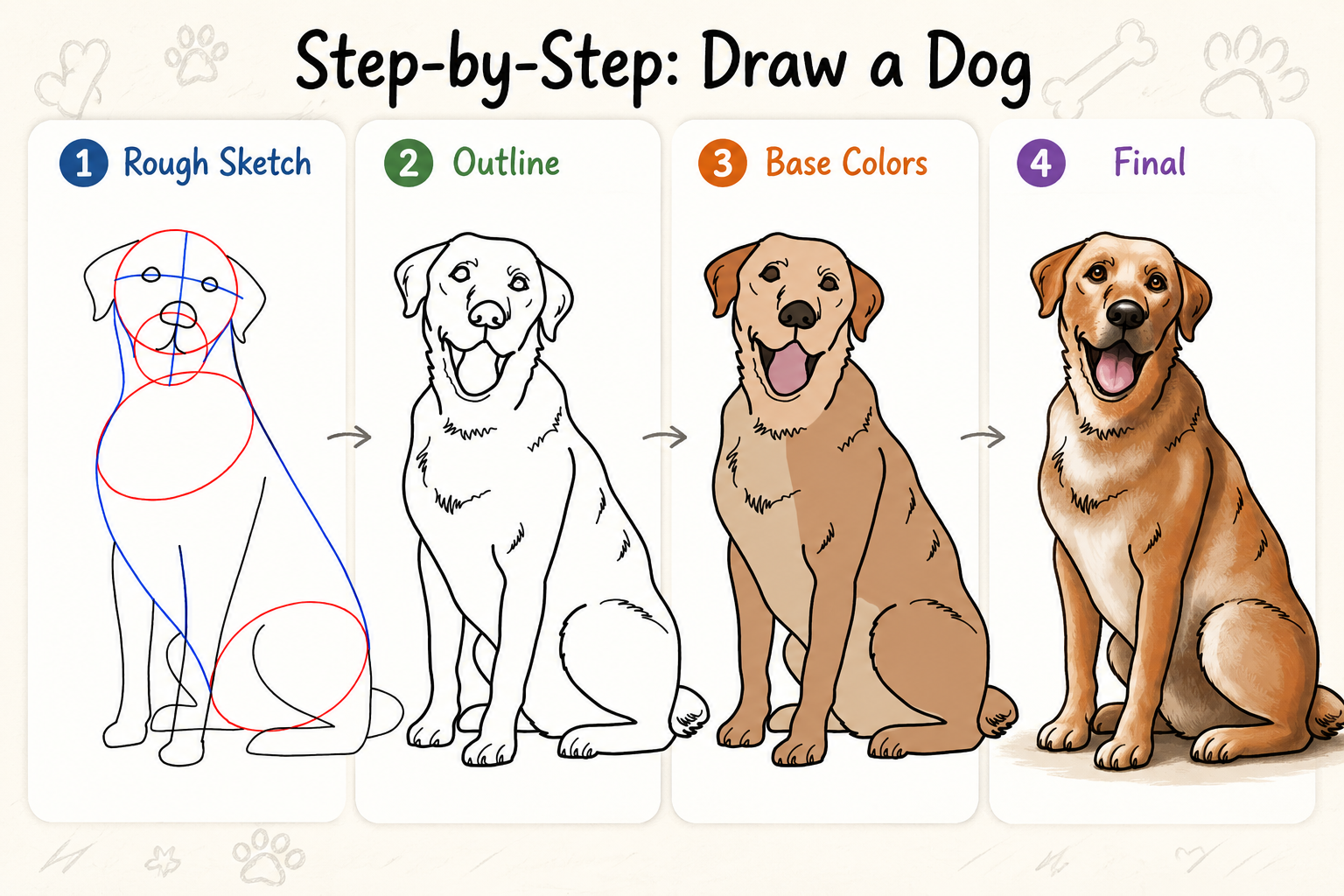
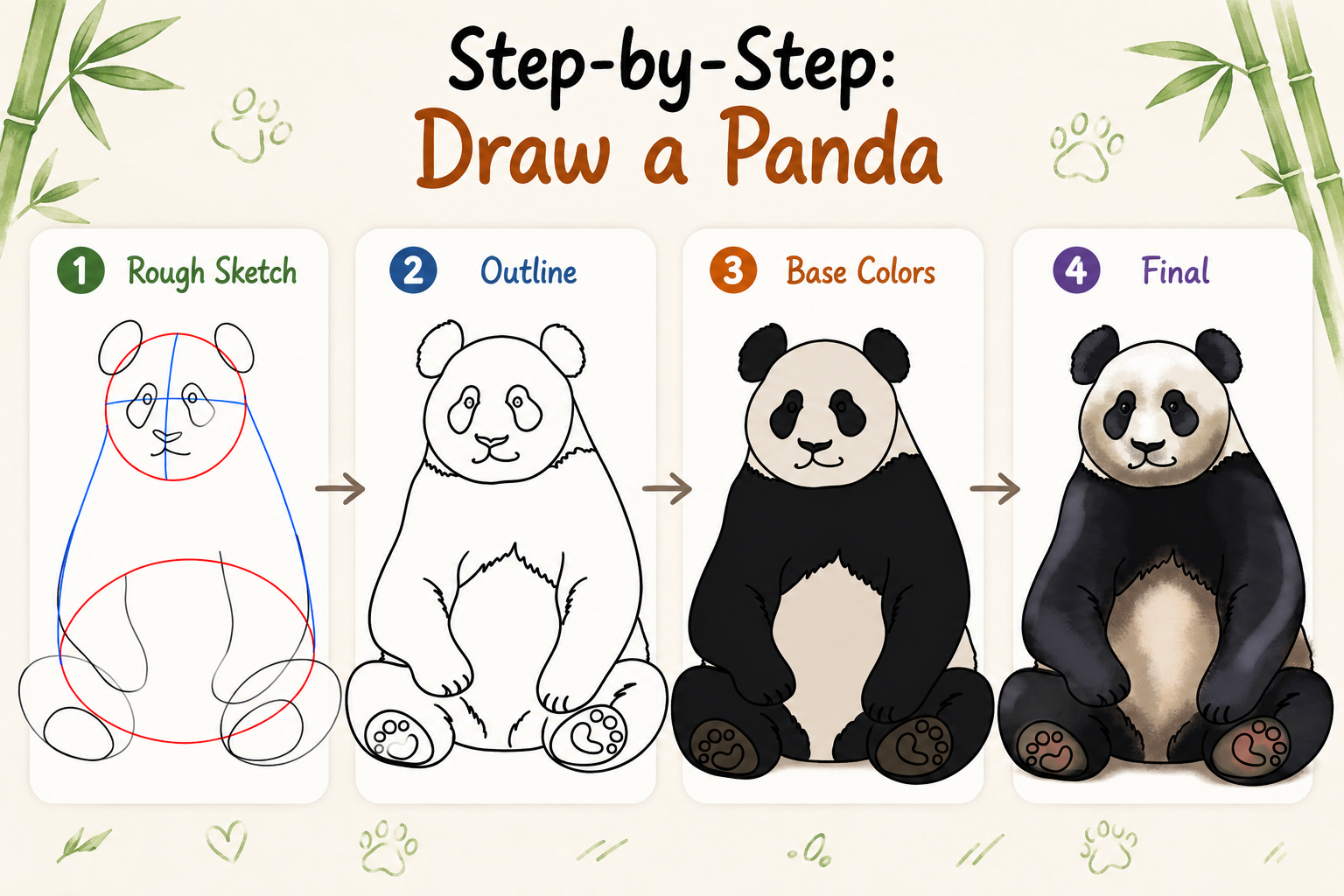
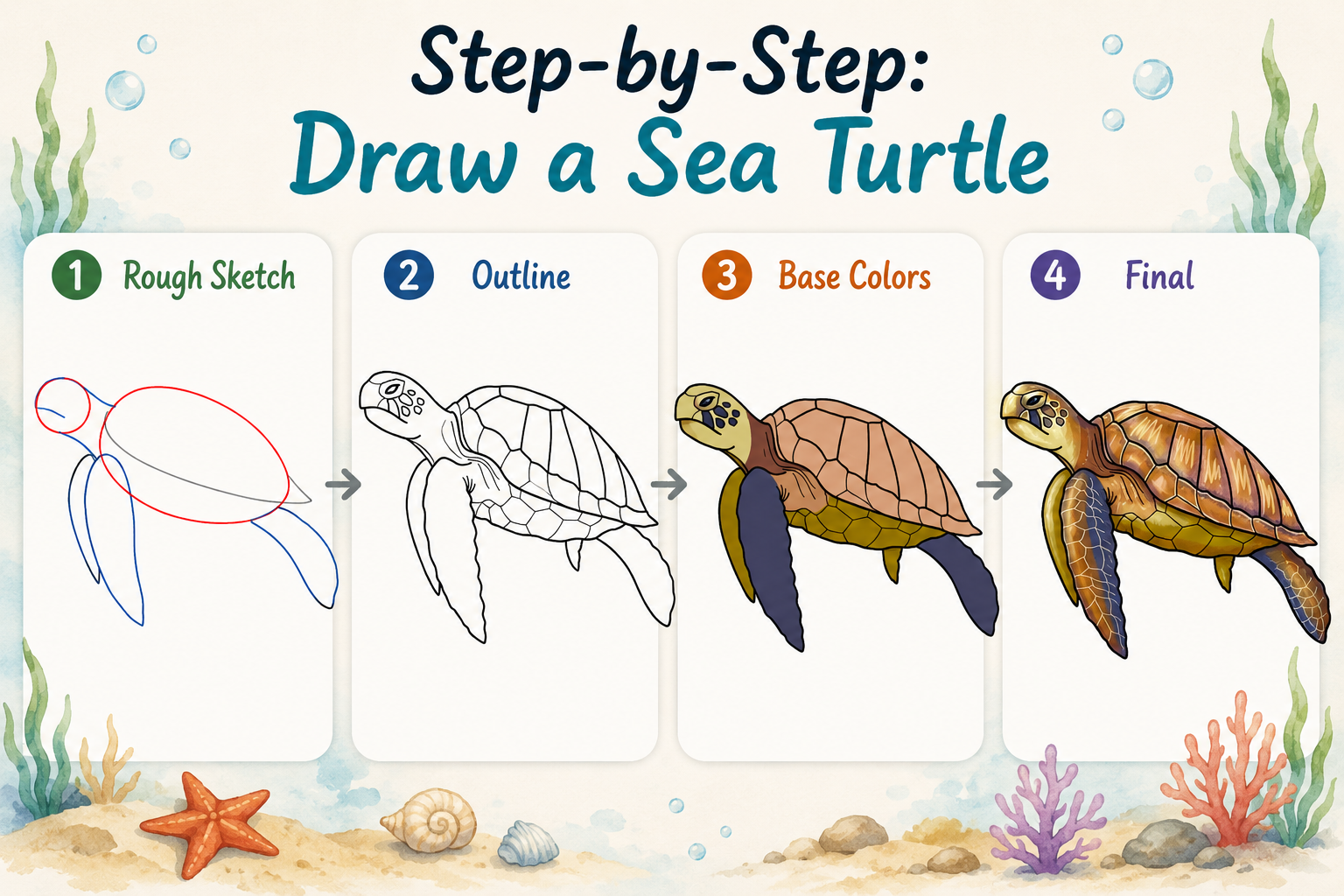
Most people don't quit drawing because they lack talent; they quit because they don't know where to start. A blank canvas and a complicated subject like a panda or a sea turtle can feel overwhelming in one go. The Animal Drawing Series solves that problem by breaking every animal into four manageable stages: Rough Sketch, Outline, Base Colors, and Final. This mirrors exactly how professional illustrators actually work, which means learners aren't just copying a picture; they're absorbing a real creative process they can reuse on any subject, forever.
This structure matters for three reasons: it builds confidence early (a rough sketch is forgiving and low-pressure), it teaches transferable technique (outlining and shading are skills that apply far beyond animals), and it gives learners a visible sense of progress after every single stage, which is one of the biggest motivators in any skill-building activity.
What's Inside the Animal Drawing Series
The Animal Drawing Series covers seven animals, each taught across the same four-stage structure, for a total of 28 guided lessons:
| Animal | What You'll Practice | Lessons |
|---|---|---|
| Fish | Fluid fins, gentle curves, and an easy shape make Fish the perfect opening lesson. | Rough Sketch, Outline, Base Colors, Final |
| Penguin | Bold black-and-white shapes teach about contrast and simple color blocking. | Rough Sketch, Outline, Base Colors, Final |
| Cat | Soft curves and expressive eyes introduce basic character and personality. | Rough Sketch, Outline, Base Colors, Final |
| Rabbit | Long ears and round forms build confidence with proportion. | Rough Sketch, Outline, Base Colors, Final |
| Sea Turtle | Patterned shells add a fun introduction to texture and detail. | Rough Sketch, Outline, Base Colors, Final |
| Dog | Familiar and friendly, Dog is great for practicing fur texture and shading. | Rough Sketch, Outline, Base Colors, Final |
| Panda | Rounded shapes and graphic black-and-white patterns make a satisfying finale. | Rough Sketch, Outline, Base Colors, Final |
Each animal moves from ocean and ice to jungle and household pets, so learners get variety in body shapes, textures, and color palettes, fins and scales for the fish, the shell pattern of the sea turtle, black-and-white contrast for the panda, and soft fur shading for the cat, rabbit, and dog.
What Children Can Actually Do By the End
By working through even one animal's four lessons, kids build a set of concrete, visible skills:
- Basic shape building – learning to see an animal as circles, ovals, and simple forms before adding detail.
- Confident linework – turning a loose rough sketch into a clean, defined outline.
- Color logic – understanding how base colors are laid down first, before shading and detail are added on top.
- Finishing an artwork – completing a piece from start to finish, which builds a real sense of accomplishment.
- Recognizing animal features – noticing what makes a penguin's body different from a cat's, which sharpens observation skills that help in school subjects like science, too.
Because every lesson is short and self-contained, children can complete one stage in a single sitting, which keeps the experience fun rather than exhausting and gives parents a natural, screen-time-friendly activity that is genuinely productive.
Why It's Perfect for Beginners
Anyone who has never drawn before often faces the same fear: "What if it looks bad?" The Animal Drawing Series removes that fear by starting every animal with a rough sketch stage, where imperfect lines are not just okay, they're expected. Beginners follow along stage by stage, so they are never asked to guess at proportions or invent a technique on their own. Instead, they build muscle memory the same way any new skill is learned: through repetition, small wins, and gradual complexity.
Because the same four-stage pattern repeats across all seven animals, beginners also unconsciously learn a repeatable drawing method they can eventually apply to animals or subjects outside the Animal Drawing Series entirely.
Why Experienced Artists Should Try It Too
The Animal Drawing Series isn't only for first-timers. Experienced artists often use structured, guided series like this as a deliberate warm-up or a way to break out of a creative rut. Redrawing a familiar subject like a cat or a dog through someone else's step-by-step process can reveal new shortcuts, new ways of blocking in color, or a different approach to linework than the artist's habits. It's also simply a fast, low-stakes way to practice a fresh style; the sea turtle's shell patterns and the panda's bold color blocking, in particular, are great studies in shape simplification and contrast that any artist can benefit from revisiting.
Not Just for Kids: Adults Are Welcome
While the Animal Drawing Series is designed with children in mind, the four-stage method works just as well for adults picking up a stylus for the first time. Adult beginners often feel more self-conscious than kids do about "not being good at drawing," and a guided, judgment-free format like this is exactly the low-pressure entry point that helps that hesitation fade. Whether it's a parent drawing alongside their child or an adult exploring a new creative hobby on their own, the Animal Drawing Series meets learners exactly where they are.
The Four-Stage Method Explained
| 1. Rough Sketch | Loose, light lines establish the animal's basic shape and proportions. No pressure for precision here; this stage is all about placement. |
| 2. Outline | The rough sketch is refined into clean, confident linework that defines the final silhouette and features. |
| 3. Base Colors | Flat, solid colors are added within the outline, teaching learners how professional colorists block in a piece before adding depth. |
| 4. Final | Shading, highlights, and small details bring the artwork to life, completing the animal with dimension and personality. |
This progression is deliberately identical across all seven animals: fish, penguin, cat, rabbit, sea turtle, dog, and panda, so that once a learner understands the pattern, every new animal becomes easier than the last.
Frequently Asked Questions
What animals are included in the Animal Drawing Series?
The Animal Drawing Series covers seven animals: fish, penguin, cat, rabbit, sea turtle, dog, and panda, each taught across four lessons: Rough Sketch, Outline, Base Colors, and Final.
Is the Animal Drawing Series suitable for beginners?
Yes. Every animal starts with a rough sketch stage designed to remove the pressure of getting lines perfect, making it an ideal starting point for anyone who has never drawn before.
Is the Animal Drawing Series only for children?
No. While it's designed with kids in mind, the same step-by-step structure works well for adult beginners and even experienced artists looking for a quick, structured drawing exercise.
How many lessons are in the Animal Drawing Series?
There are 28 lessons in total: 7 animals, each broken into 4 stages.
What is the four-stage drawing method used in the Animal Drawing Series?
Every animal is taught through Rough Sketch, Outline, Base Colors, and Final stages, mirroring the process professional illustrators use to build a finished piece.
Ready to draw your first animal? Start the Animal Drawing Series on Drawing Desk today.
Start Drawing Now


