


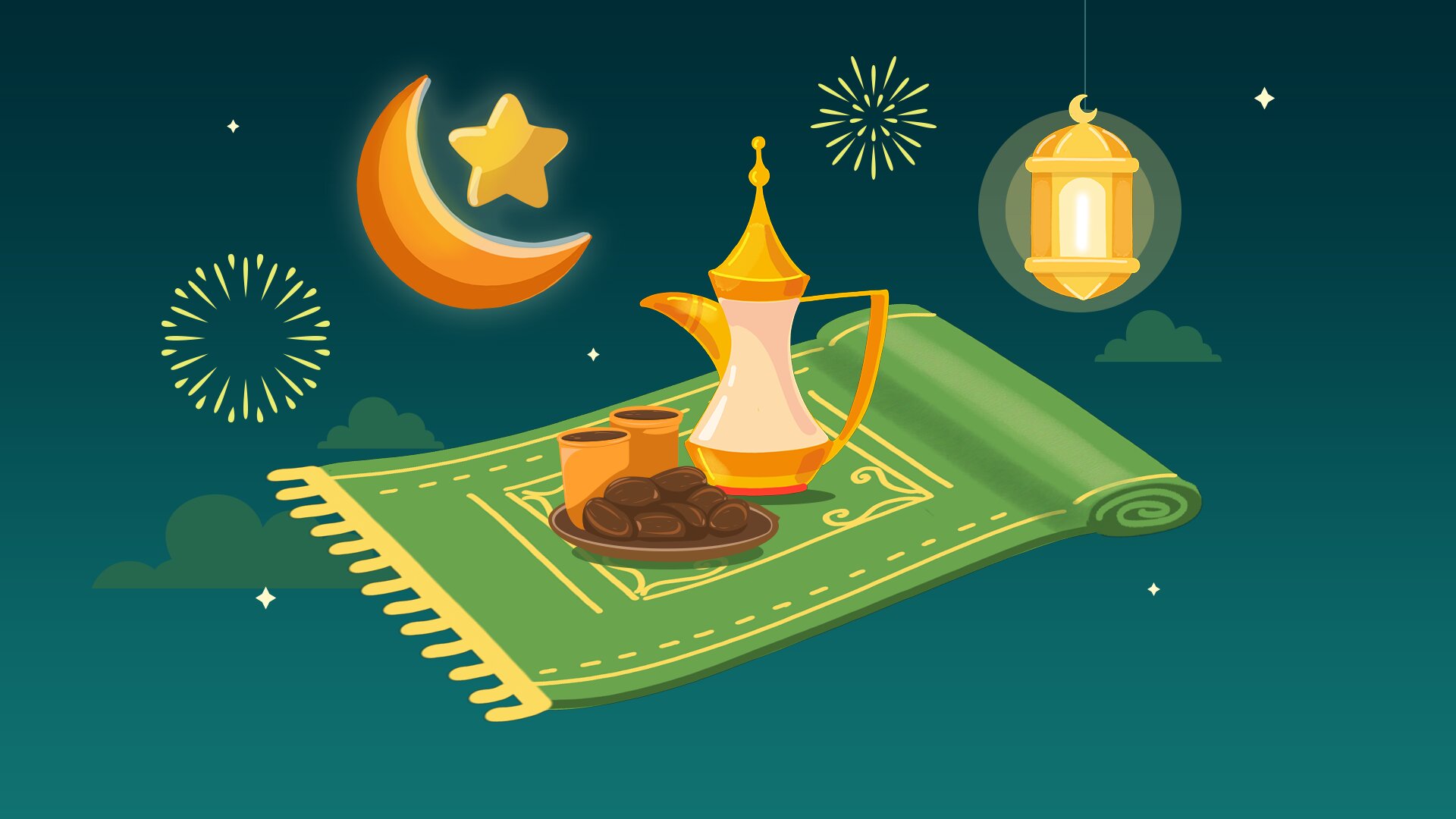
Ramadan is a sacred month of reflection, family, and tradition, and for parents, it's also a beautiful opportunity to turn screen time into something meaningful and productive. Drawing Desk's Ramadan drawing lessons help children aged 5 and up celebrate this blessed month creatively while learning about Islamic traditions and building real artistic skills through step-by-step guidance.
This isn't just another app to keep kids occupied during fasting hours. Drawing Desk is designed to help parents guide their children through culturally enriching, structured creative activities during Ramadan, giving kids something to be proud of and parents peace of mind knowing screen time is both engaging and educational.
How Drawing Desk Helps Parents During Ramadan
During Ramadan, parents balance fasting, prayers, special meals, and family time, all while keeping children meaningfully engaged. Drawing Desk's Ramadan drawing lessons solve this by offering guided art tutorials that celebrate Ramadan's traditions while teaching real skills.
With Drawing Desk, children learn to draw traditional Ramadan symbols, the crescent moon (Hilal), ornate lanterns (Fanoos), traditional mats, traditional coffee pots (Dallah), festive drums (Bedug), and woven rice cakes (Ketupat), step by step, at their own pace. Parents get structured, productive screen-time activities that spark creativity, teach Islamic culture, and keep children engaged during the blessed month.
Why Ramadan Is the Perfect Time for Creative Learning
Ramadan offers a unique opportunity for children to connect with their faith and heritage through hands-on activities. Children are naturally curious about the traditions, decorations, and celebrations that make this month special, and Drawing Desk channels that curiosity into meaningful creative projects.
How Drawing Desk turns Ramadan curiosity into skill-building:
-
Cultural and spiritual connection: Children learn the meaning and significance behind each Ramadan symbol as they draw it, deepening their understanding of Islamic traditions.
-
Structured creativity during fasting hours: Parents don't have to plan activities; Drawing Desk provides ready-made lessons that children can complete independently while parents prepare iftar or attend prayers.
-
Confidence-building through completion: Finishing a guided drawing gives children a sense of accomplishment and pride, especially when sharing their artwork with family during Ramadan gatherings.
-
Screen time with purpose and value: Instead of passive entertainment, children are actively creating, learning about their faith, and celebrating the blessed month.
Ramadan is when children are most receptive to learning about Islamic culture and traditions. Drawing Desk meets them where they are and turns that spiritual curiosity into lasting creative skills and cultural understanding.

How Drawing Desk Helps Parents Manage Screen Time During Ramadan
Parents know that not all screen time is equal, especially during Ramadan when the focus is on faith, family, and reflection. During busy days filled with fasting, prayers, and iftar preparations, it can be challenging to find activities that keep children engaged while being spiritually meaningful.
Drawing Desk gives parents what they need during Ramadan:
-
No supervision required: Lessons are self-guided with clear visual step-by-step instructions, so children can work independently while parents prepare suhoor, iftar, or attend Taraweeh prayers.
-
Progress tracking: Parents can see what their child has completed and watch their artistic skills improve throughout the month.
-
Safe content: No distractions, no inappropriate content, just focused creative learning.
-
Cross-platform accessibility: Works on tablets, phones, and computers, so children can draw at home, at the mosque, or while visiting family during Ramadan.
-
Shareable results for Eid: Children can save and share their finished artwork with family members, creating meaningful Ramadan memories and even Eid greeting cards.
Drawing Desk is designed to fit naturally into the rhythm of Ramadan family life, giving children something purposeful to do while parents focus on worship, charity, and what matters most during this blessed month.
How Ramadan Drawing Lessons Support Child Development
Beyond the joy of creating beautiful Islamic artwork, Drawing Desk's Ramadan lessons build foundational skills that benefit children throughout the year and support their overall development.
Developmental benefits for children aged 5–12:
-
Fine motor skills: Controlling digital drawing tools strengthens hand-eye coordination and precision, which supports handwriting and other academic skills.
-
Focus and patience: Following multi-step instructions teaches children to stay focused on a task from beginning to end, a skill that mirrors the discipline of Ramadan itself.
-
Pattern recognition and geometry: Islamic art is renowned for its intricate patterns; children learn to identify and replicate symmetry, shapes, and decorative details.
-
Islamic cultural awareness: Learning what each Ramadan symbol represents helps children understand and appreciate their faith's traditions and history.
-
Self-confidence and independence: Completing a guided drawing successfully shows children they can learn new skills on their own, building self-reliance.
-
Creative expression within tradition: Once children master the guided lessons, they often experiment with their own designs, creating personalized Ramadan decorations and Eid cards.
These are skills that Islamic schools, educators, and child development experts consistently emphasize, and Drawing Desk delivers them through an activity children genuinely enjoy during the holiest month of the year.

What Ramadan Drawing Lessons Are Included?
Drawing Desk's 'Celebrate the Joy of Ramadan' course includes six guided lessons, each designed to teach a specific artistic skill while celebrating the traditions of Ramadan. Every lesson is beginner-friendly and suitable for children as young as 5, with clear on-screen visual instructions and no reading required.
Lesson 1: How to Draw the Hilal (Crescent Moon)
The Hilal, or crescent moon, marks the beginning and end of Ramadan. In this lesson, children learn to draw the iconic crescent moon with a star, practicing smooth curves, symmetry, and the balance of celestial elements.
Perfect for: Ramadan decorations, Eid cards, and understanding lunar calendar significance.
Lesson 2: How to Draw a Fanoos (Ramadan Lantern)
The Fanoos is a traditional lantern that lights up homes and streets during Ramadan, especially in Middle Eastern and North African cultures. Children draw this ornate lantern with decorative patterns, learning about Islamic architectural details and light symbolism.
Perfect for: Children fascinated by Ramadan decorations and traditional Islamic art.
Lesson 3: How to Draw a Traditional Mat
Traditional mats are central to daily use during Ramadan and throughout the year. This lesson teaches children to draw a beautifully patterned prayer mat with geometric designs, introducing them to Islamic art traditions.
Perfect for: Understanding the importance of Ramadan and exploring geometric patterns.
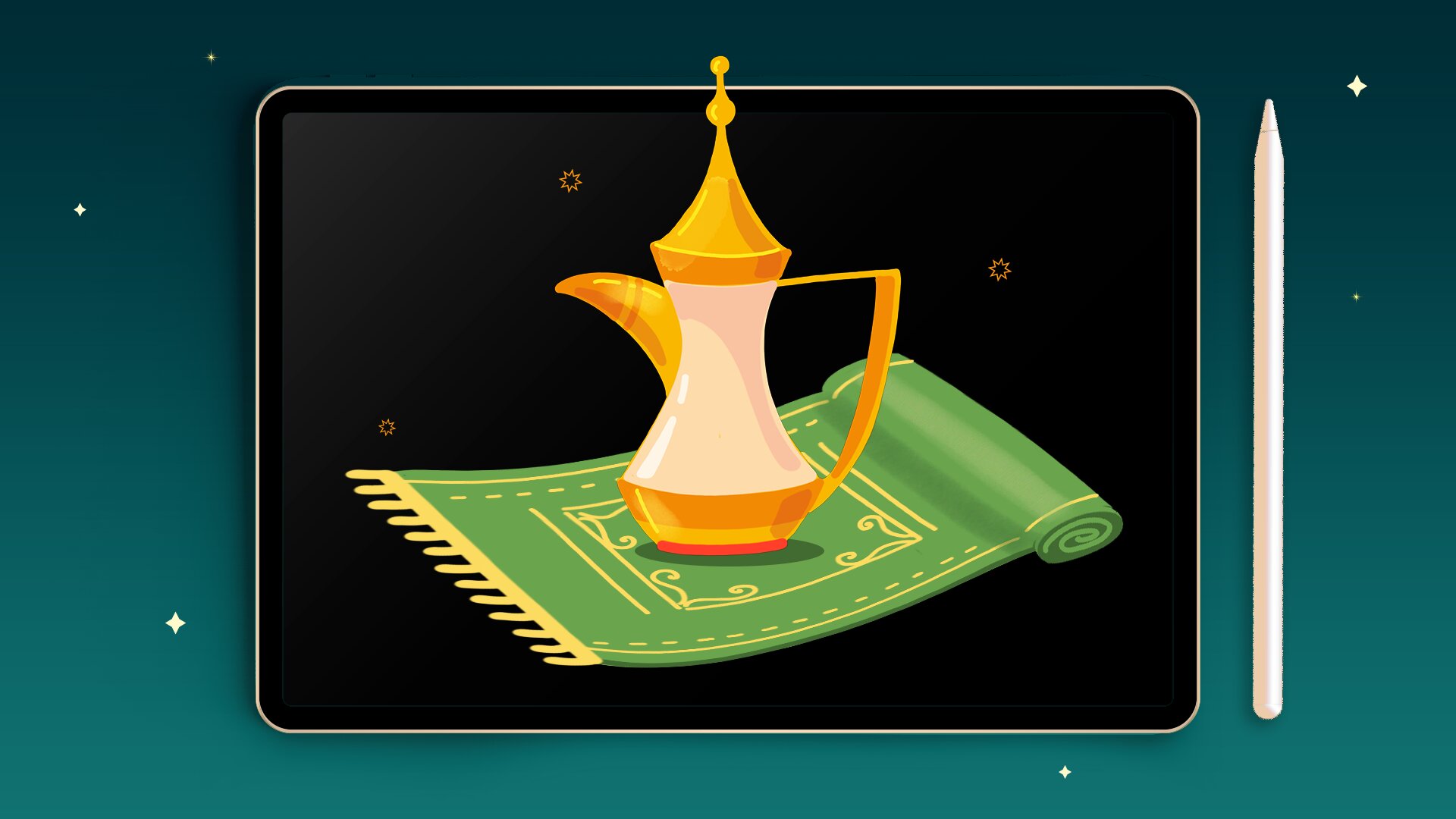
Lesson 4: How to Draw a Dallah (Traditional Coffee Pot)
The Dallah is a traditional Arabic coffee pot used to serve guests during iftar and Ramadan gatherings, symbolizing hospitality and community. Children draw this elegant vessel with its distinctive spout and ornate handle.
Perfect for: Learning about Arab hospitality traditions and cultural symbols of generosity during Ramadan.
Lesson 5: How to Draw a Bedug (Ramadan Drum)
The Bedug is a traditional drum used in Southeast Asia to call the community to prayer and mark iftar time during Ramadan. Children learn to draw this cylindrical drum with its wooden stand, exploring how different cultures celebrate Ramadan.
Perfect for: Discovering the diversity of Islamic traditions across different regions.
Lesson 6: How to Draw Ketupat (Woven Rice Cake)
Ketupat is a traditional woven rice cake commonly eaten during Eid al-Fitr celebrations, especially in Indonesia, Malaysia, and Singapore. Its diamond woven pattern symbolizes forgiveness and returning to purity. Children draw this intricate geometric design, practicing patience and attention to detail.
Perfect for: Eid celebrations, understanding Southeast Asian Ramadan traditions, and exploring the cultural diversity of the Muslim world.
What Do Ramadan Symbols Represent?
One of the most valuable aspects of Drawing Desk's Ramadan lessons is that children don't just learn how to draw, they learn what they're drawing, why it matters in Islam, and how Muslims around the world celebrate this blessed month. Here's a quick reference for parents and children:
|
Symbol |
Islamic & Cultural Meaning |
|---|---|
|
Marks the beginning and end of Ramadan based on lunar sighting. Symbolizes the Islamic calendar and the unity of Muslims worldwide observing the same blessed month. |
|
|
Lights up homes and streets during Ramadan, especially in Egypt and the Levant. Represents guidance, spiritual illumination, and the light of faith during the holy month. |
|
|
Essential for the five daily prayers and Taraweeh during Ramadan. Symbolizes devotion, humility, and the direct connection between a believer and Allah. |
|
|
Used to serve Arabic coffee to guests during iftar. Represents Arab hospitality, generosity, and the communal spirit of breaking fast together during Ramadan. |
|
|
Calls the community to prayer and marks iftar in Southeast Asia. Symbolizes unity, communal worship, and the diverse cultural expressions of Islamic faith. |
|
|
Eaten during Eid al-Fitr celebrations. Its woven pattern symbolizes forgiveness, purity, and the spiritual cleansing achieved through a month of fasting and devotion. |
By understanding these meanings, children develop a deeper connection to their Islamic heritage and can explain the significance of Ramadan symbols to friends and family, turning drawing into a conversation starter about faith, culture, and the beauty of Islamic traditions worldwide.
How Drawing Desk's Step-by-Step Lessons Work
Drawing Desk is built specifically for children and beginners. Every Ramadan lesson is broken down into small, manageable steps with visual guidance at every stage, perfect for children learning independently during Ramadan.
What makes Drawing Desk lessons effective:
-
On-screen visual step-by-step instructions: Children see exactly what to do next, with no reading required. Ideal for multilingual households and young learners.
-
Built-in Islamic art tools: Brushes, colors, and canvases are preset with appropriate colors and tools for Islamic art, so children can start drawing immediately.
-
Undo and redo functionality: Mistakes are part of learning; children can easily correct errors and try again without frustration, teaching patience and persistence.
-
Automatic progress saving: Children can pause for prayers or iftar and return to lessons whenever they want without losing their work.
-
Personal artwork gallery: Completed drawings are saved in a gallery children can revisit, share during Eid, or use to create Ramadan greeting cards for family.
The result? Children build artistic skills progressively throughout Ramadan, gain confidence with every completed lesson, and genuinely enjoy learning about their Islamic heritage through creative expression
What Parents Are Saying About Drawing Desk During Ramadan
Muslim parents worldwide use Drawing Desk during Ramadan because it solves a very specific challenge: how to keep children meaningfully engaged, spiritually connected, and productively occupied during the blessed month. Here's what they're saying:
⭐⭐⭐⭐⭐
"As a teacher, i believe that these lessons are perfectly structured for young students. Parents tell me their kids continue using the app at home throughout the month."
— Ibrahim Hassan
⭐⭐⭐⭐⭐
"I've been looking for, productive screen time options for my daughters during Ramadan, and Drawing Desk is exactly what I needed. My 6 and 10-year-old girls spent hours drawing prayer mats and Ketupat instead of watching videos. They learned so much about Ramadan traditions."
— Aisha Mohammed
⭐⭐⭐⭐⭐
"Drawing Desk made this Ramadan so much easier for me as a working mother. The app kept my children entertained and learning while I managed fasting and household responsibilities. They even made Eid cards for their grandparents using the drawings. Highly recommend!"
— Zaynab Ali
⭐⭐⭐⭐⭐
"What I appreciate most about Drawing Desk is that my daughter can use it completely independently. The visual instructions mean she doesn't need to ask for help. During Ramadan, she drew all the symbols and learned their Islamic meanings; it was creative, educational, and spiritually enriching."
— Omar Yusuf
Who Are These Ramadan Drawing Lessons For?
These step-by-step Ramadan drawing lessons are designed to be inclusive and accessible for Muslim families, Islamic schools, and anyone interested in learning about Islamic culture through art.
Perfect for:
-
Muslim parents managing Ramadan activities and looking for halal, productive alternatives to passive screen time during fasting hours.
-
Children aged 5–12 who want to celebrate Ramadan creatively while learning about Islamic traditions and symbols.
-
Islamic school teachers planning Ramadan classroom projects that combine art education with Islamic studies.
-
Families observing Ramadan who want to involve children meaningfully in the spiritual and cultural aspects of the blessed month.
-
Anyone interested in learning about Islamic culture, traditions, and the diversity of Ramadan celebrations worldwide through creative expression.
No prior drawing experience is required. Drawing Desk meets children exactly where they are and guides them step by step to create beautiful Islamic artwork they'll be proud to share during Eid.
Make This Ramadan Creative, Meaningful, and Blessed
This Ramadan, transform screen time into something your child will treasure. Drawing Desk's Ramadan lessons combine Islamic cultural learning, artistic skill-building, and spiritual enrichment, all in one app designed specifically for children and families observing the blessed month.
Give your child the gift of creative Islamic education this Ramadan. Start drawing today with Drawing Desk and make this holy month colorful, educational, spiritually meaningful, and unforgettable.
Frequently Asked Questions
How does Drawing Desk help parents during Ramadan?
Drawing Desk provides structured, halal screen-time activities that keep children engaged, learning about Islam, and productively occupied during Ramadan. Parents get ready-made Islamic art lessons that children can complete independently during fasting hours, prayer times, or iftar preparations. The app is ad-free, culturally appropriate, and designed to support Muslim families during the blessed month.
What age group are Drawing Desk's Ramadan lessons suitable for?
The Ramadan lessons are designed for children aged 5–12, though younger children with adult guidance and older children interested in Islamic art can also benefit. Each lesson uses clear visual instructions and simple shapes, so no reading is required and beginners can follow along confidently.
How do Drawing Desk Ramadan lessons support Islamic education?
Each Ramadan drawing lesson includes the Islamic and cultural significance behind the symbol. Children learn not just how to draw, but what each symbol represents in Islam, why it's important during Ramadan, and how different Muslim cultures worldwide celebrate the blessed month. This combines artistic skill-building with authentic Islamic cultural education.
What Ramadan symbols can children learn to draw?
Children can learn to draw six traditional Ramadan and Islamic symbols: the Hilal (crescent moon), Fanoos (ornate lantern), traditional prayer mat, Dallah (Arabic coffee pot), Bedug (Ramadan drum), and Ketupat (woven rice cake). Each lesson teaches artistic skills while explaining the symbol's spiritual and cultural meaning in Islam.
Can children use their Ramadan drawings for Eid?
Absolutely. Children can save their completed Ramadan drawings and use them to create personalized Eid greeting cards for family and friends, Ramadan decorations for the home, or gifts for relatives. The artwork gallery feature makes it easy for children to revisit and share their Islamic art creations.
Why is creative learning important during Ramadan?
Ramadan is a time when children are naturally curious about Islamic traditions, symbols, and celebrations. Creative activities like drawing help children connect with their faith in a hands-on, meaningful way. Drawing Desk channels that spiritual curiosity into skill-building activities that teach Islamic cultural awareness, boost confidence, and create lasting Ramadan memories while aligning with the month's values of learning, reflection, and personal growth.
Related Articles
- Chinese New Year Drawing Lessons for Kids: Spark Creativity This Festive Season with Drawing Desk
-
Valentine’s Drawing Lessons: Easy & Cute Valentine’s Day Art for Everyone


